

Experience is not measured by the kilometers you travel or the number of jobs on your resume. Without active presence to observe and quiet moments to reflect, even the grandest journeys and upheavals remain fleeting memories that fail to crystallize into profound wisdom.
Lately, I find myself pondering a deceptively simple question: What does it truly mean to be an experienced person?
When asking friends, the most common answers are: traveling across many countries, admiring breathtaking landscapes, and hopping between diverse careers to live 'a thousand lives.' While that sounds glamorous on the surface, I believe that definition is fundamentally incomplete.
In reality, I have met people who have traversed all five continents yet whose thinking remains rigidly trapped in narrow preconceptions. Conversely, I have known individuals who spent their entire lives in a small town, yet whose conversations and perspectives on human nature are remarkably deep and empathetic.
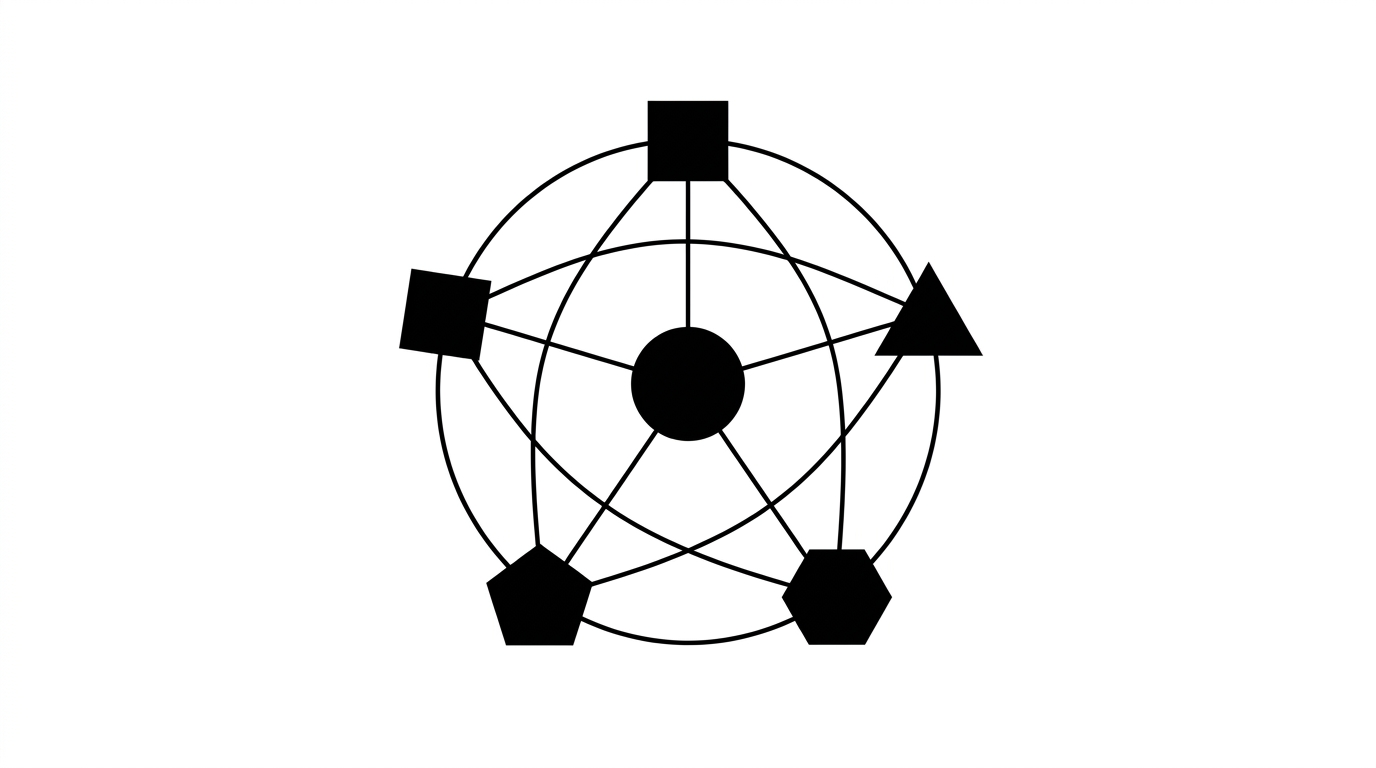
If we think of experience as a four-dimensional function, I believe it consists of four essential pillars:
graph LR
    classDef box fill:#18181b,stroke:#3f3f46,stroke-width:1.5px,color:#fafafa;

    A["Breadth: Contextual Diversity"] --> E["Genuine Experience"]
    B["Depth: Presence & Detailed Observation"] --> E
    C["Intensity: Emotional Impact"] --> E
    D["Reflection: Distilling Lessons"] --> E

    class A,B,C,D,E box;
1. Breadth: Contextual Diversity
Breadth represents your openness to stepping into unfamiliar situations and breaking away from routine: tasting an exotic cuisine you've never tried, genuinely listening to someone with an opposing worldview, or taking on a project far outside your comfort zone.
You don't have to fly halfway across the globe to gain breadth. As long as you refuse to confine yourself to a closed social circle, your worldview expands naturally every day.
2. Depth: Presence and Detailed Observation
Depth is rooted in whether you are truly present in the moment or merely skimming across the surface.
Take having a morning bowl of pho, for instance. You could swallow it hurriedly in five minutes just to fill your stomach before work. Or you could take a few seconds to savor the delicate sweetness of the broth, the sharp aroma of fresh scallions, and observe the lively sidewalk rhythm of Hanoi or Saigon.
In the exact same trip or event, someone who observes details captures a reservoir of sensory and emotional data vastly richer than someone who only pauses to snap a check-in photo before scrolling on their phone.
3. Intensity: Impact That Shapes Resilience
Intensity stems from moments powerful enough to shake your worldview. These experiences are rarely comfortable, but they serve as the catalyst for our most significant personal growth:
- The first time you take sole ownership of an important project with no safety net behind you.
- The first time you taste crushing failure and have to rebuild yourself from zero.
- The first time you endure deep loss or say goodbye to someone you cherished.
Your endurance and how you navigate those emotional fault lines are precisely what forge depth, poise, and substance in your character.
4. Reflection: Converting Memories into Living Wisdom
This is the most critical link in the chain, yet the one most easily neglected.
Experience without reflection remains nothing more than a passing memory; it never matures into wisdom. I once went through periods so frantic that I worked nonstop from dawn to midnight, jumping between projects without ever pausing to ask: 'What did I do well today? Where did I go wrong? What does this teach me?' Looking back, I realized that while I had covered tremendous distance, my underlying competence had barely advanced.
A study by Professor Giada Di Stefano at Harvard Business School (2016) demonstrated that employees who spent just 15 minutes at the end of the day reflecting and writing down lessons learned achieved a 22.8% higher performance boost compared to those who simply worked continuously. Spending 10 to 15 minutes in the evening or a quiet weekend morning journaling transforms random encounters into permanent intellectual capital and tangible capability.
You don't need to live the life of a globetrotting nomad or a manic startup founder to be considered a person of rich experience.
Whatever your profession and wherever you live, as long as you stay curious about the unknown, observe each present moment with care, face failure with courage, and maintain the habit of self-reflection, you are continuously accumulating the most precious experiences of your life.
References
- Dewey, J. (1938). Experience and Education. Kappa Delta Pi / Macmillan. (Core principle: Humans do not learn directly from experience, but from reflecting on experience).
- Kolb, D. A. (1984). Experiential Learning: Experience as the Source of Learning and Development. Prentice-Hall. (The four-stage experiential learning cycle).
- Di Stefano, G., Gino, F., Pisano, G. P., & Staats, B. R. (2016). Making experience count: The role of reflection in individual learning. Management Science, 62(3), 671-690. (Empirical proof that 15 minutes of end-of-day reflection boosts personal performance by 22.8%).
- Langer, E. J. (1989). Mindfulness. Addison-Wesley / Merloyd Lawrence. (Depth of observation: Differentiating mindful presence from mindless automaticity).
- Tedeschi, R. G., & Calhoun, L. G. (1996). The Posttraumatic Growth Inventory: Measuring the positive legacy of trauma. Journal of Traumatic Stress, 9(3), 455-471. (Impact intensity: Cognitive resilience developed through navigating adversity).