
Academic excellence is not about pulling all-nighters or filling notebooks with neat cursive. It is about treating exams as a performance sport. Spacing your review sessions across time and hammering mock exams allows you to master complex material while preserving real free time to unwind.
In my previous post, Ranking the Most Effective Study Methods, I shared empirical research breaking down why passive re-reading and highlighting are ineffective. But when it came to reshaping my own study routine during my bachelor's degree, the true catalyst was a video by Ali Abdaal on how he ranked first at Cambridge University medical school.
Here are the 5 core areas distilled from his video, along with the practical lessons I applied directly to my own learning.
1. Revision Technique: The Core Pivot
This group of techniques created the single biggest breakthrough in how I approach learning:
- Notetaking is often inefficient: Spending hours handwriting or copying lecture notes feels productive, but it demands very little cognitive effort. Shift that energy toward effortful retrieval instead.
- Focus on understanding (The Feynman Technique): Whenever you encounter a difficult concept, try explaining it in plain everyday words as if teaching a beginner. Any friction or stumbling point exposes an immediate knowledge gap.
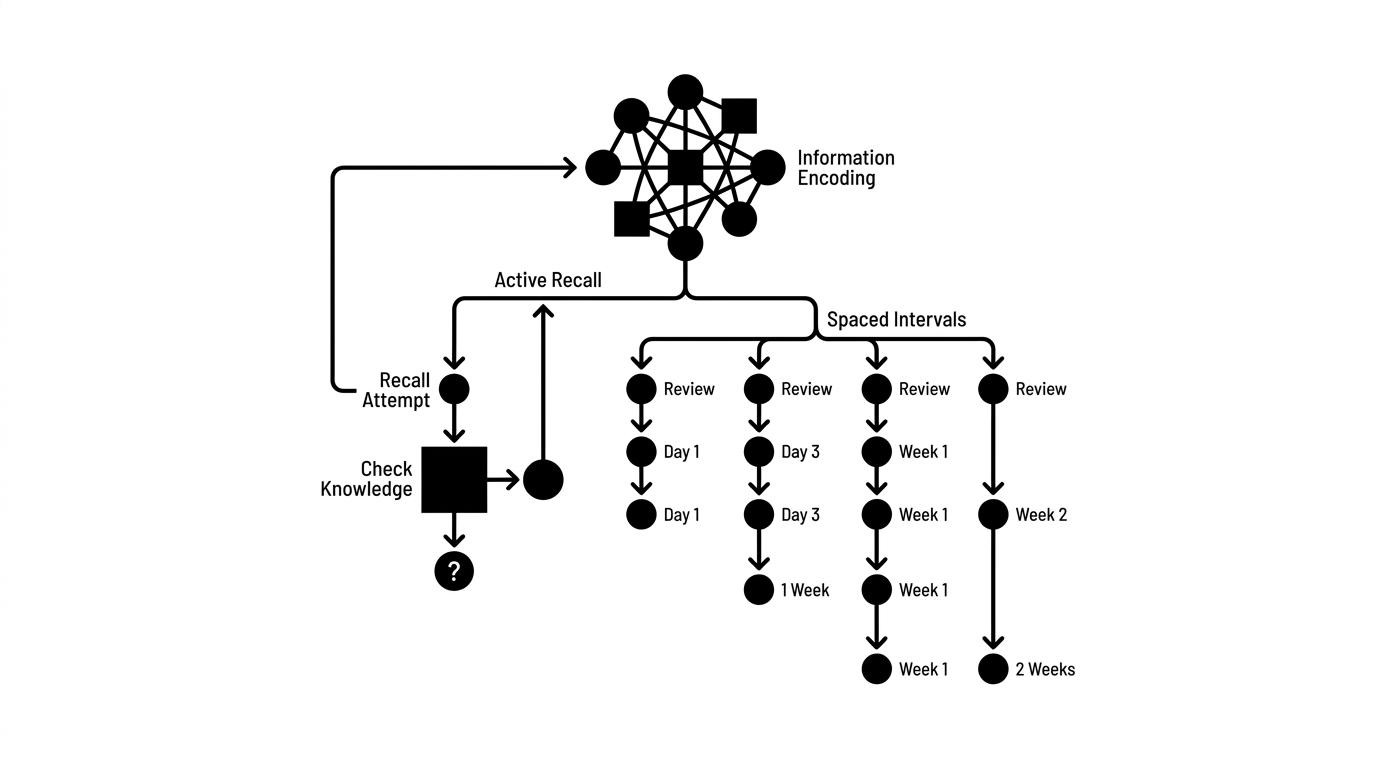
- Active Recall: Stop passively reading. Close the book and test yourself. Forcing your brain to reconstruct concepts from memory is the only proven way to forge durable neural pathways.
- Spaced Repetition: Spread out your study sessions across expanding time intervals to halt the natural forgetting curve.
- Interleaving: Mix different problem types or subjects in a single study block to keep your brain agile and train pattern recognition.
2. Exam Technique: Treat Exams as a Performance Game
- Do lots of mock exams: During my bachelor's degree, I spent the vast majority of my revision time working directly through past papers and mock tests. Mock exams prepare you for time pressure and reveal exactly how examiners think and grade.
- Use intentional flair: In essay-based exams, crisp introductions and structured arguments stand out clearly to examiners grading hundreds of papers.
- Bank points with coursework: Maximize every continuous assessment and assignment score early on. High coursework scores dramatically lower the psychological pressure on final exam day.
3. Target Revision: Focus on Weaknesses
- Scope the subject: Build a tree diagram of the entire curriculum and use a traffic-light system (red, amber, green) to categorize your mastery of each topic.
- Focus on your weaknesses: Do not waste precious time re-reading material you already know well just to feel comfortable. Attack the topics you find most intimidating when your energy is highest.
- Use a retrospective revision timetable: Instead of designing rigid, forward-looking study schedules that collapse after a few days, log what you studied on the day and rate your confidence to decide what to tackle next.
4. Friends and Social Learning: Test and Measure
Ali advocates forming study groups to stay motivated, quizzing each other regularly, and sharing essays to learn diverse perspectives.
During university, I shared mock tests with friends from time to time. However, in practice, I discovered that I focus best and retain the most when studying alone.
My advice is pragmatic: if you have a group of like-minded friends, test group study sessions to see if they move the needle for you. If collaborative study works, stick with it. But if you find that studying solo gives you deeper concentration, embrace it without second-guessing yourself. Always test and measure what genuinely delivers results.
5. Balance and Longevity: Study Early to Protect Your Free Time
- Have a dedicated workspace: Study in a designated, distraction-free environment like a quiet library corner so your brain immediately enters deep work mode.
- Protect time to unwind: By scheduling spaced repetition intervals well in advance and splitting my study hours across mock tests, I never had to pull panic-fueled all-nighters before exams. Rest and sleep are biologically required for memory consolidation.
- Enjoy the journey: Do not view studying as pure suffering while deferring all happiness until graduation day. Find genuine curiosity in what you learn each day.
References & Further Reading
- Ali Abdaal. (2018). How I Ranked 1st at Cambridge University - 20 Study Tips. Watch on YouTube.
- Ranking the Most Effective Study Methods (Meta-analysis synthesis across 169,000+ learners).